Aneurysm
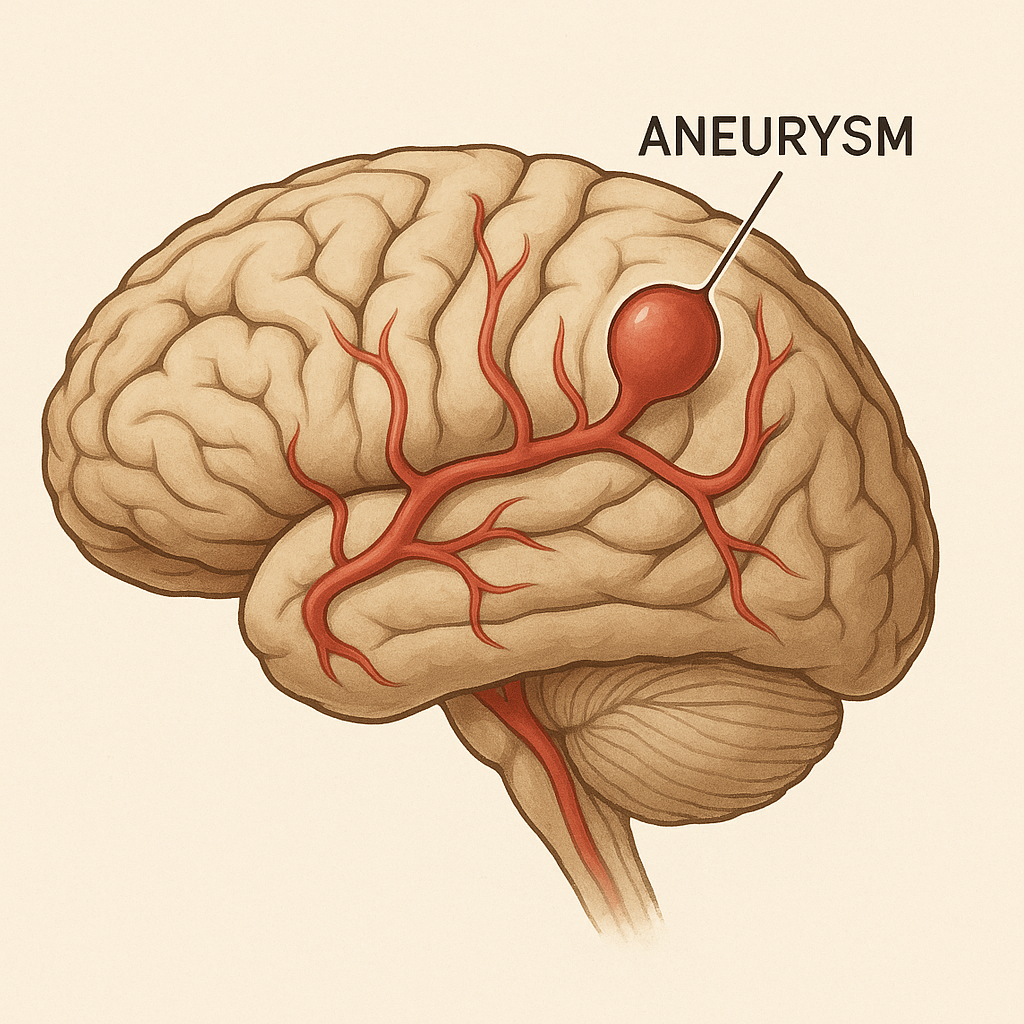
Definition
A brain aneurysm is a weakness in a blood vessel wall that leads to a bulge or ballooning. It may remain stable or rupture, causing bleeding into or around the brain.
Prevalence
Affects 2–3% of the population. Many aneurysms remain unruptured and undetected.
Symptoms
Unruptured:
Headache
Vision changes
Eye pain
Facial numbness (rare)
Ruptured
Sudden, severe “thunderclap” headache
Nausea/vomiting
Neck stiffness
Loss of consciousness
Neurological deficits
Diagnosis
CT scan for suspected rupture
CT angiography or MR angiography for vascular imaging
Cerebral angiography for detailed assessment
Treatment Options
Observation with periodic imaging for small, stable aneurysms
Endovascular coiling to close the aneurysm from inside the vessel
Microsurgical clipping for durable exclusion of the aneurysm
Intensive management of blood pressure and risk factors