Spinal Arthritis
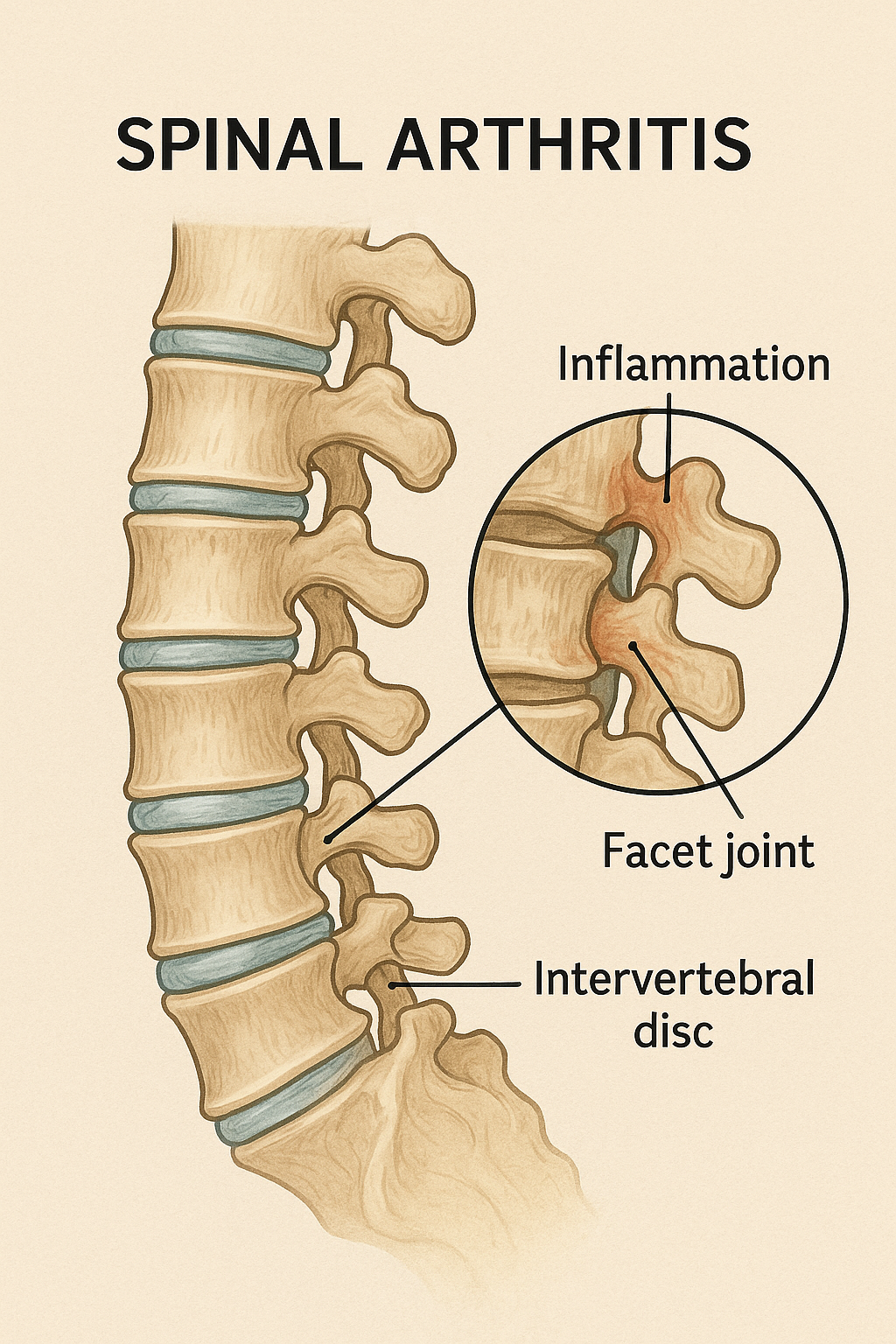
Definition
Spinal arthritis refers to inflammation and degeneration of the joints and discs in the spine. It most commonly affects the facet joints and can lead to stiffness, chronic pain, and reduced mobility. Osteoarthritis is the most frequent type, but inflammatory forms (such as rheumatoid arthritis or ankylosing spondylitis) may also involve the spine.
Prevalence
Very common, especially with age. Degenerative spinal arthritis affects a large proportion of adults over 50 and is a leading cause of chronic back and neck pain.
Symptoms
Symptoms depend on the level of the spine involved and may include:
Stiffness, especially in the morning or after sitting
Localised or radiating back or neck pain
Pain that worsens with activity or prolonged standing
Reduced flexibility or difficulty bending/turning
Numbness, tingling, or weakness if nerves become compressed
Audible “grinding” or “popping” from affected joints
Diagnosis
Diagnosis includes:
Detailed history and physical examination
Assessment of spinal flexibility, posture, and nerve function
X-rays to evaluate joint space narrowing or bone spurs
MRI to assess discs, nerves, inflammation, or spinal stenosis
Blood tests if inflammatory arthritis is suspected
Treatment Options
Treatment is tailored to severity and underlying cause:
Physiotherapy to improve strength, posture, and mobility
Anti-inflammatory medications for pain and inflammation
Heat/ice therapy and activity modification
Facet joint or epidural steroid injections for persistent pain
Disease-modifying medications for inflammatory arthritis
Surgery only when nerve compression, instability, or severe degeneration fails conservative management