Areterionvenous Malformation (AVM)
Definition
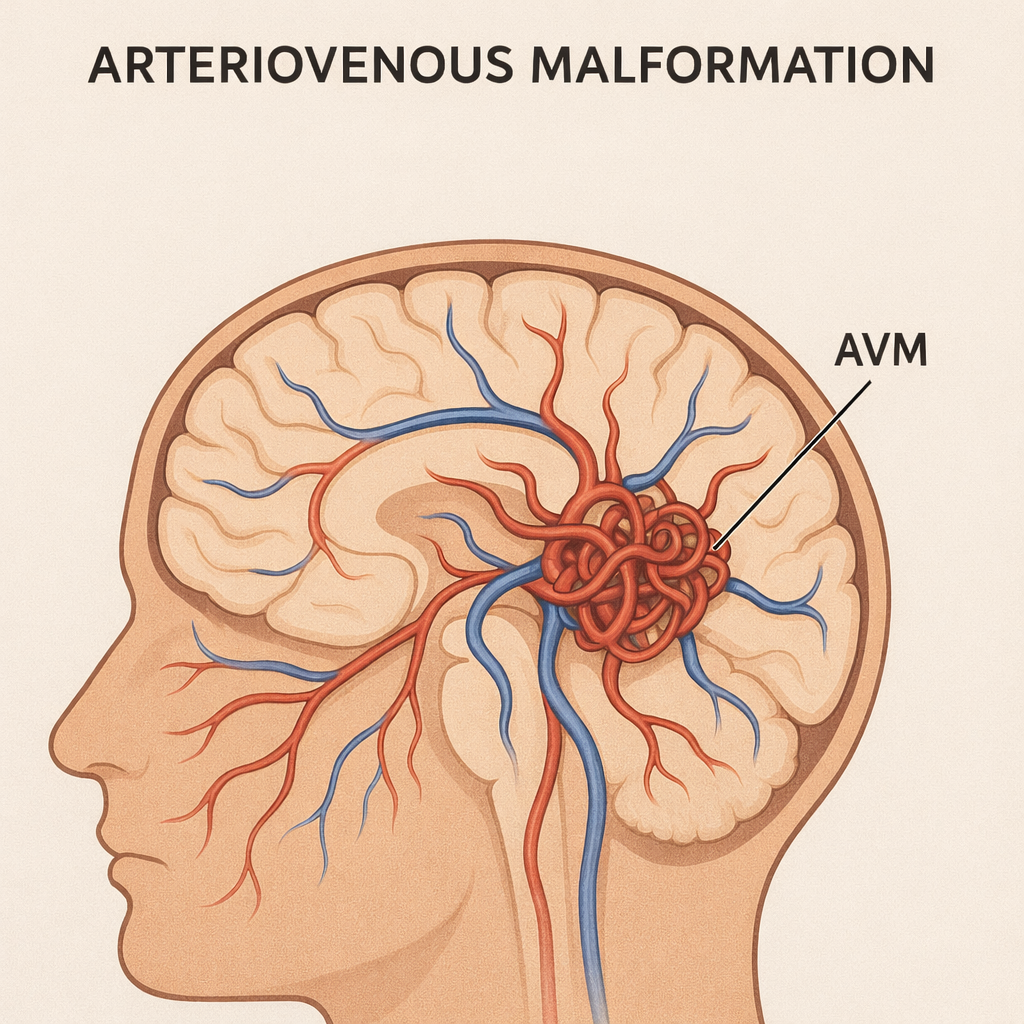
A brain arteriovenous malformation (AVM) is an abnormal tangle of arteries and veins in the brain that bypasses normal capillary networks, disrupting blood flow and increasing the risk of bleeding.
Prevalence
AVMs are rare: approximately 1 in 100,000 people. They may be present from birth but often remain undetected until later in life.
Symptoms
Symptoms vary depending on the AVM’s size and location. Common presentations include:
Seizures
Severe headaches
Weakness or numbness in part of the body
Difficulty speaking or understanding language
Vision loss or double vision
Unsteady gait or balance problems
Cognitive or other neurological changes
Diagnosis
Diagnosis involves:
Review of symptoms and neurological examination
Imaging studies: MRI, CT scan
Vascular imaging: cerebral angiography, CTA, or MRA for detailed vessel mapping
Treatment Options
Treatment depends on size, location, and whether bleeding or symptoms have occurred. Options include:
Observation for small, asymptomatic AVMs with regular imaging follow-up
Medications to manage symptoms like seizures or headaches (do not eliminate the AVM)
Microsurgical resection to physically remove the AVM when accessible and high risk
Endovascular embolisation, injecting a blocking agent via catheter to reduce abnormal blood flow
Stereotactic radiosurgery (e.g., Gamma Knife or CyberKnife) to shrink and close the AVM over time, especially in hard-to-reach locations