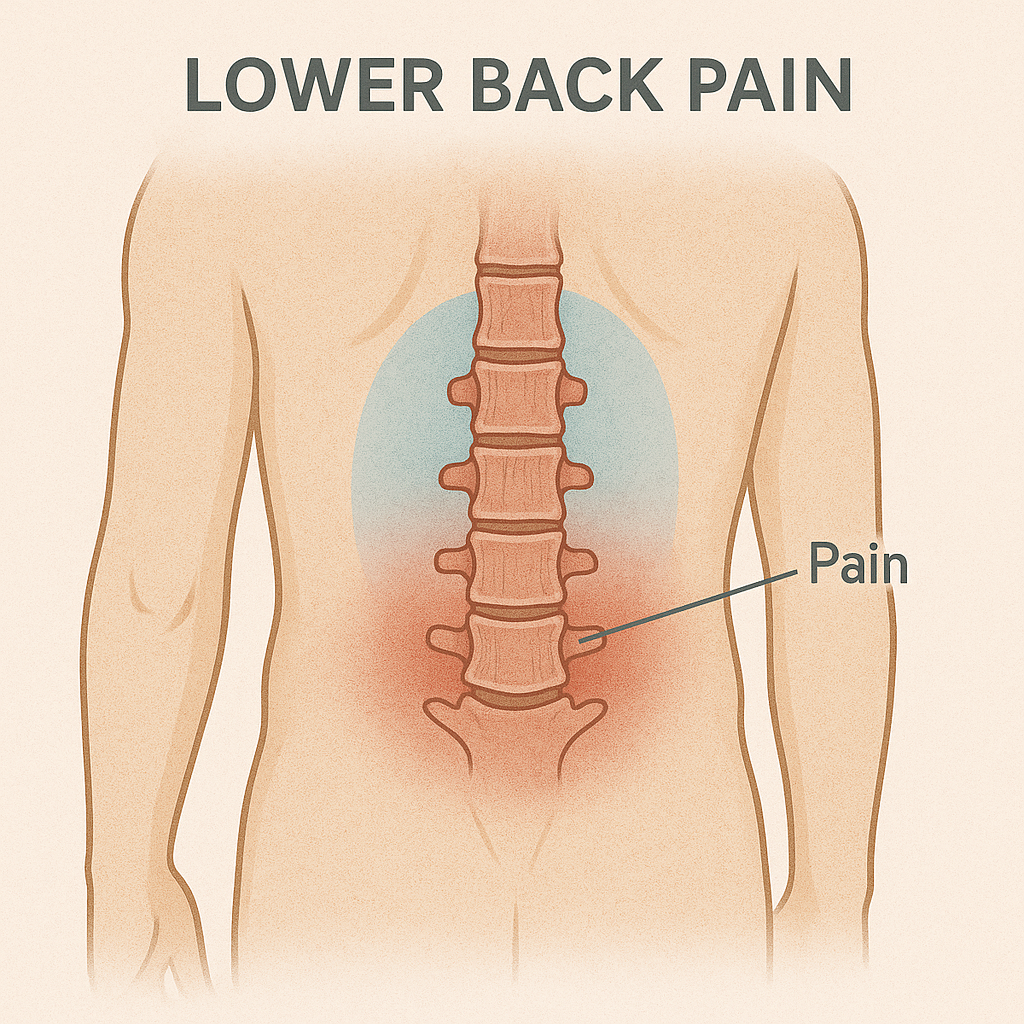
Herniated Disc (Slipped Disc)
Definition
A herniated disc occurs when the soft inner portion of an intervertebral disc protrudes through its outer layer, potentially compressing nerves.
Prevalence
Common among adults ages 30–55 and a leading cause of back and leg pain.
Symptoms
Local or radiating back/neck pain
Leg pain (sciatica) or arm pain
Numbness or tingling
Muscle weakness
Pain worsened by coughing, bending, or lifting
Diagnosis
Physical examination
MRI to identify disc herniation
Nerve conduction studies if deficits are unclear
Treatment Options
Physiotherapy and activity modification
Anti-inflammatory medications
Epidural steroid injections
Surgery (microdiscectomy) for severe or persistent nerve compression