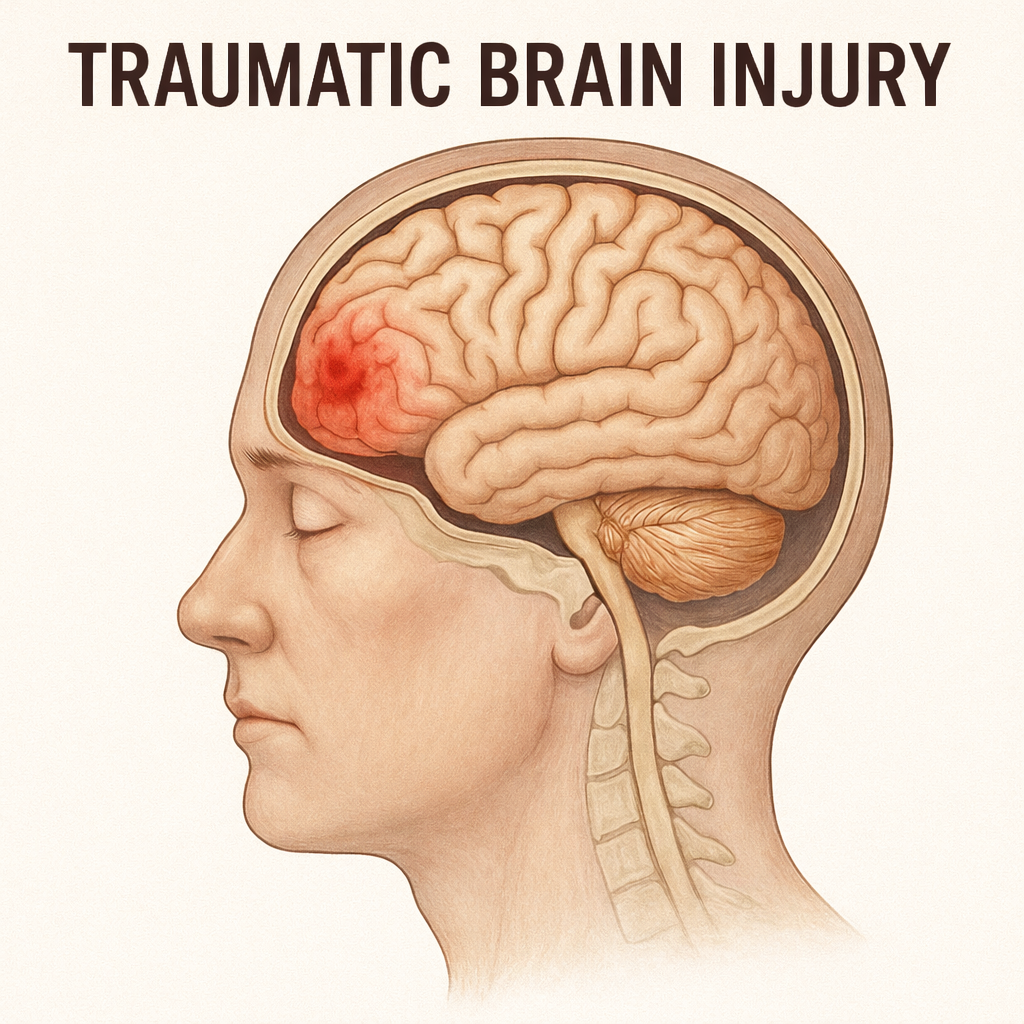
Traumatic Brain Injury
Definition
Traumatic brain injury is damage to the brain caused by an external force such as a fall, impact, or rapid acceleration. It ranges from mild concussion to severe brain damage.
Prevalence
A common cause of emergency admissions. Highest risk groups include young adults, athletes, and older adults.
Symptoms
Headache
Confusion or memory loss
Dizziness
Nausea or vomiting
Seizures (moderate or severe cases)
Loss of consciousness
Behavioural or cognitive changes
Diagnosis
CT scan in acute settings
MRI for persistent symptoms or subtle injury
Neurological examination
Cognitive assessment
Monitoring for complications such as bleeding or swelling
Treatment Options
Observation and rest for mild injuries
Managing headaches, nausea, and sleep disturbances
Surgery for bleeding or swelling
Intensive care for severe injuries
Rehabilitation for cognitive and functional recovery