Arm Pain
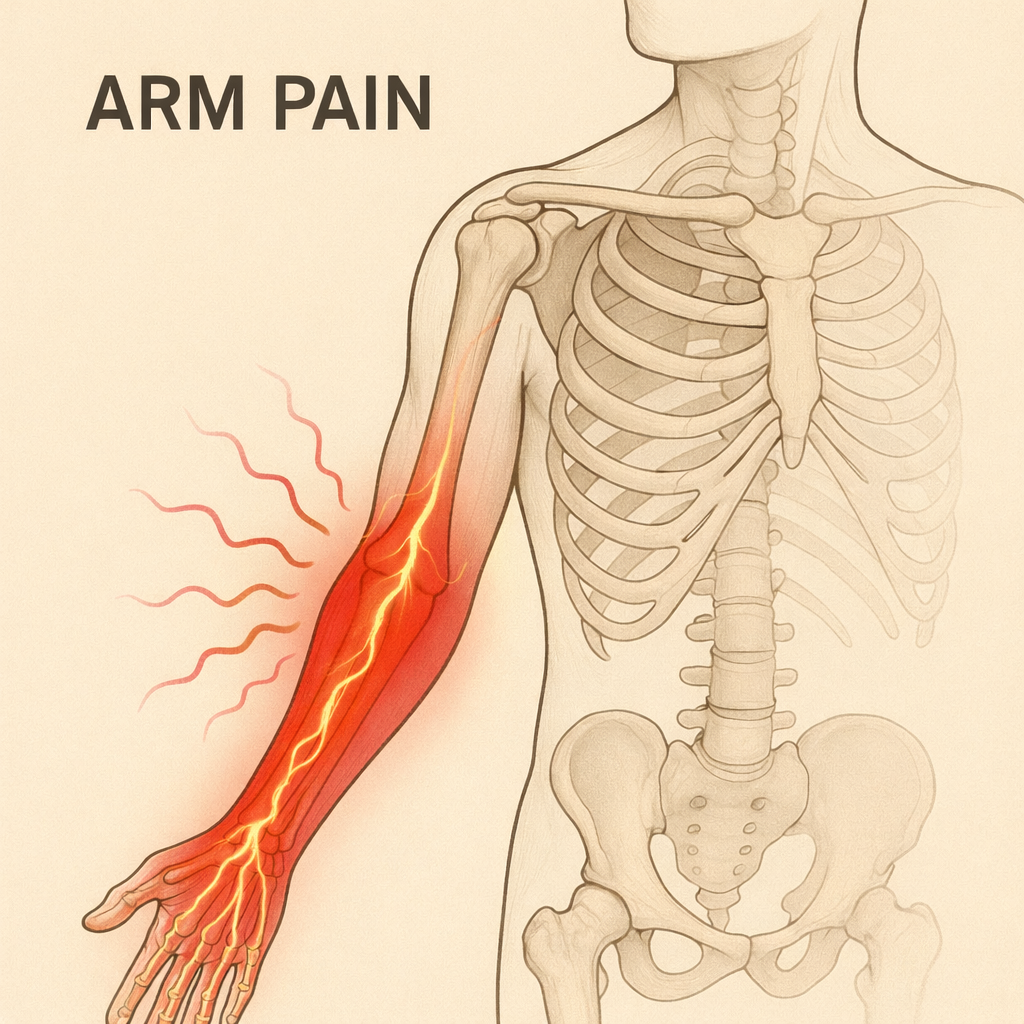
Definition
Arm pain refers to discomfort, aching, sharp pain, or weakness anywhere from the shoulder down to the fingers. It can arise from muscles, tendons, nerves, joints, or blood vessels, and may be caused by injury, overuse, nerve compression, or underlying medical conditions.
Prevalence
Arm pain is extremely common across all age groups. It is one of the most frequent musculoskeletal complaints in primary care and often related to repetitive activity, posture, or nerve irritation.
Symptoms
Symptoms vary depending on the underlying cause and may include:
Dull or sharp pain in the upper arm, forearm, elbow, or wrist
Tingling, burning, or numbness (often nerve-related)
Weakness or reduced grip strength
Swelling, stiffness, or reduced range of motion
Pain that worsens with activity or specific movements
Radiating pain from the neck or shoulder into the arm
Diagnosis
Diagnosis involves:
History and physical examination
Assessment of range of motion, strength, and nerve function
Imaging as needed: X-ray, ultrasound, MRI
Nerve studies (EMG/NCS) for suspected nerve compression or neuropathy
Blood tests if inflammation, infection, or systemic disease is suspected
Treatment Options
Treatment depends on the cause and severity:
Rest and activity modification to reduce strain
Physiotherapy to improve strength, mobility, and posture
Anti-inflammatory medications for pain and swelling
Splints or braces for tendon or nerve irritation (e.g., carpal tunnel)
Steroid injections for persistent tendon or joint inflammation
Surgery is reserved for fractures, severe nerve compression, or structural injuries that do not respond to conservative treatment