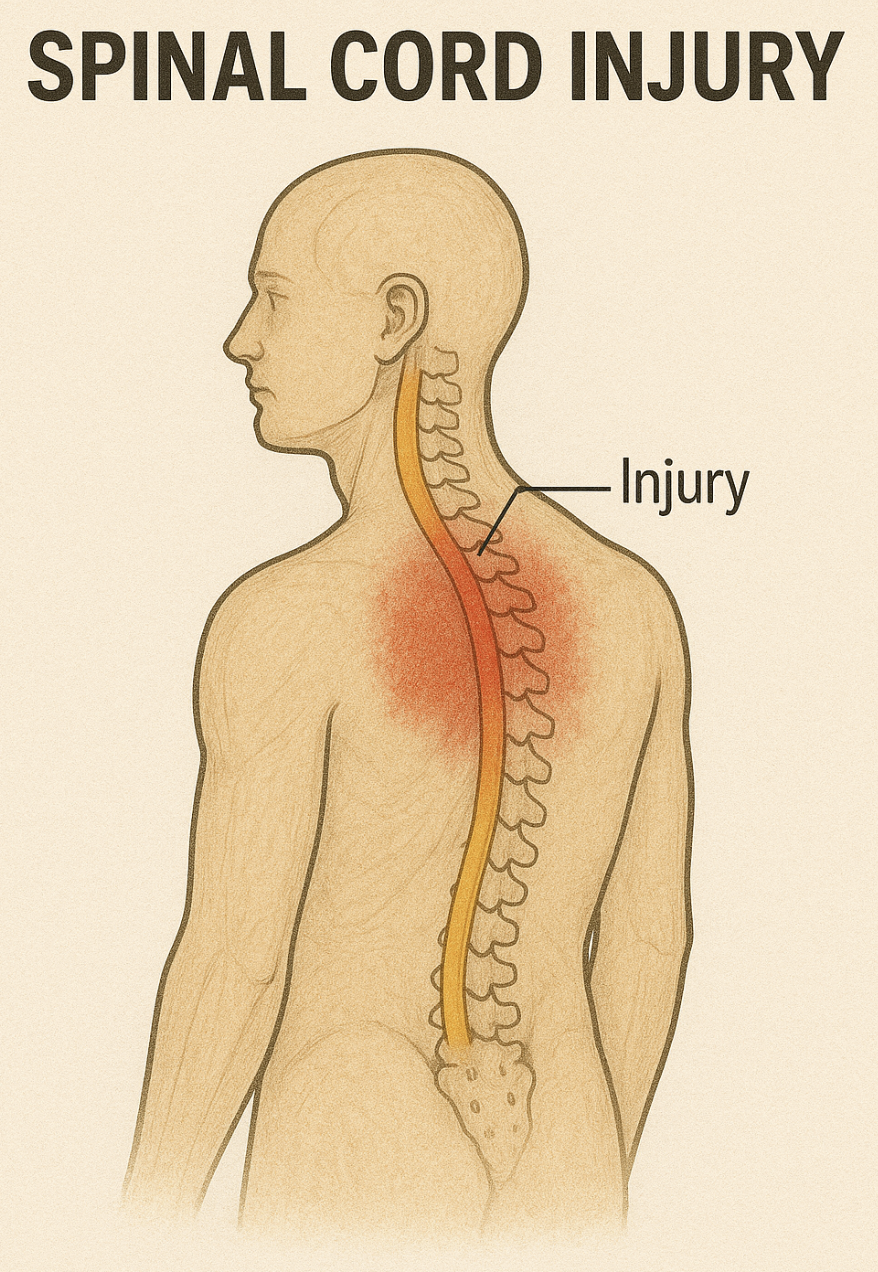
Spinal Cord Injury
Definition
A spinal cord injury occurs when trauma, compression, or disease damages the spinal cord, resulting in partial or complete loss of movement, sensation, or function below the level of injury.
Prevalence
Relatively uncommon but life-altering. Most cases occur due to accidents, falls, or spinal degeneration.
Symptoms
Loss of movement or paralysis
Numbness or reduced sensation
Loss of bladder or bowel control
Muscle spasms
Pain or pressure in the neck or back
Difficulty breathing (high cervical injuries)
Diagnosis
CT scan in trauma scenarios
MRI to assess soft tissue and cord damage
Neurological examination (ASIA scale)
Blood tests and monitoring for complications
Treatment Options
Immediate stabilisation and immobilisation
Surgery to relieve compression or stabilise the spine
Intensive rehabilitation and physiotherapy
Medications for pain, spasticity, and complications
Long-term management of mobility, bladder, and bowel function