Brain Haemhorrhage
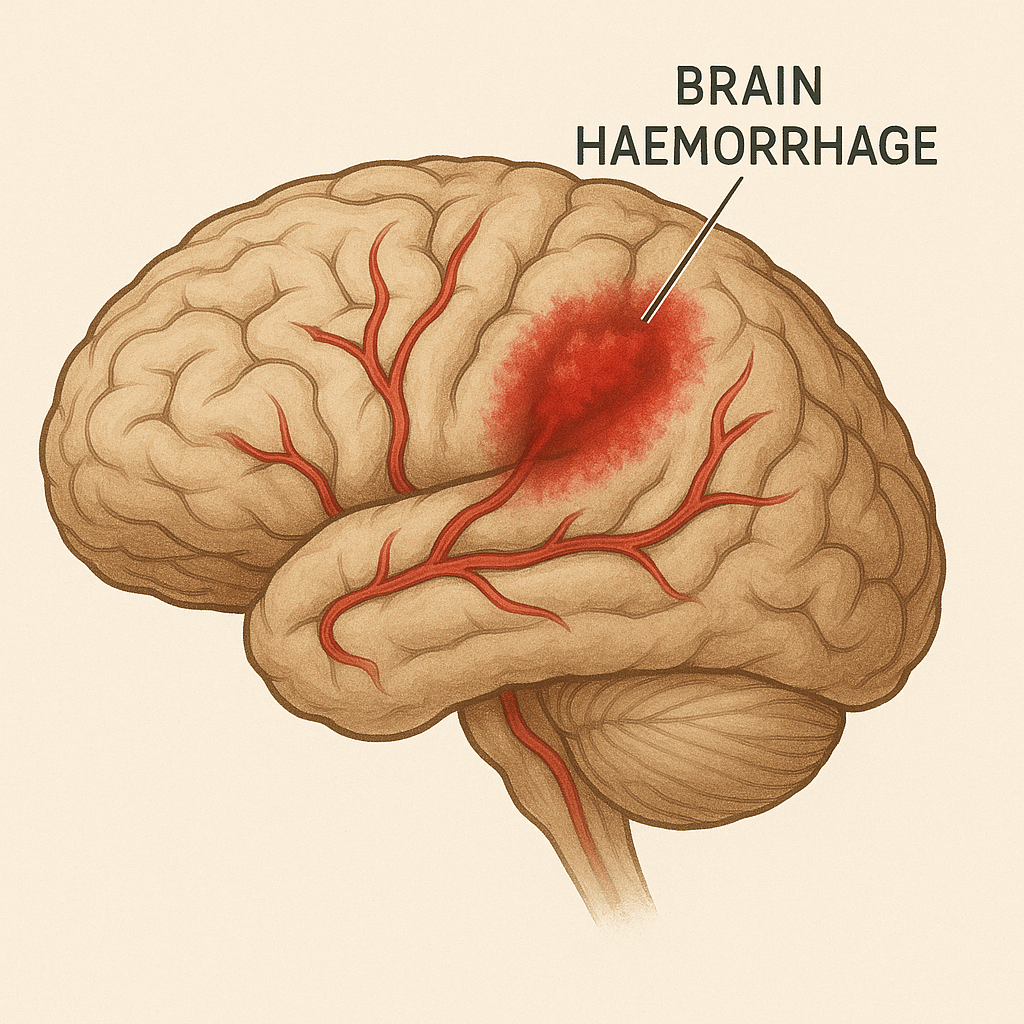
Definition
A brain haemorrhage is bleeding within the brain tissue or surrounding spaces, usually caused by ruptured vessels due to trauma, high blood pressure, vascular malformations, or aneurysms.
Prevalence
Accounts for 10–20% of all strokes. Risk increases with age, high blood pressure, and certain vascular conditions.
Symptoms
Sudden severe headache
Weakness or paralysis
Difficulty speaking or understanding
Vision loss
Nausea/vomiting
Seizures
Decreased consciousness
Diagnosis
Emergency CT scan to confirm bleeding
MRI for further assessment
CT or MR angiography to identify underlying vascular causes
Blood tests and neurological evaluation
Treatment Options
Stabilisation and blood pressure control
Reversal of blood thinners
Surgical evacuation of large or life-threatening haematomas
Treatment of underlying cause (aneurysm, AVM, etc.)
Intensive care monitoring and rehabilitation